
W. Somerset Maugham
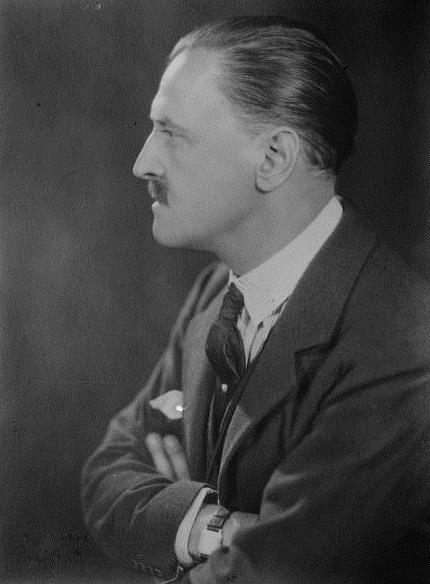
English writer of plays, novels, and short stories.

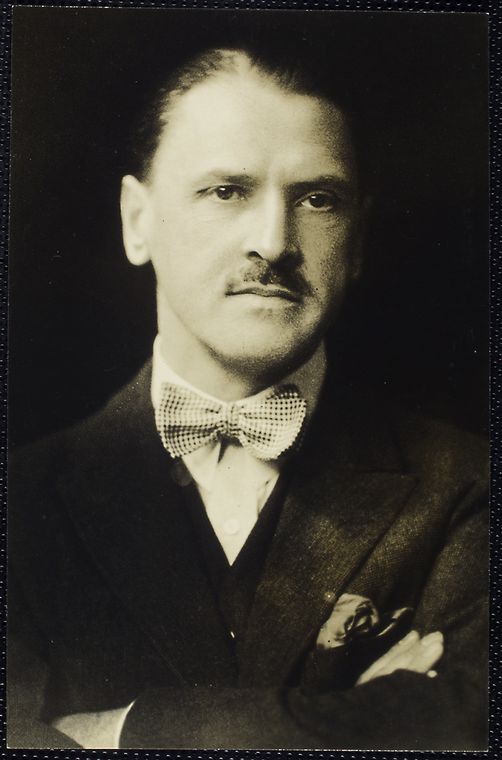
William Somerset Maugham · Public domain
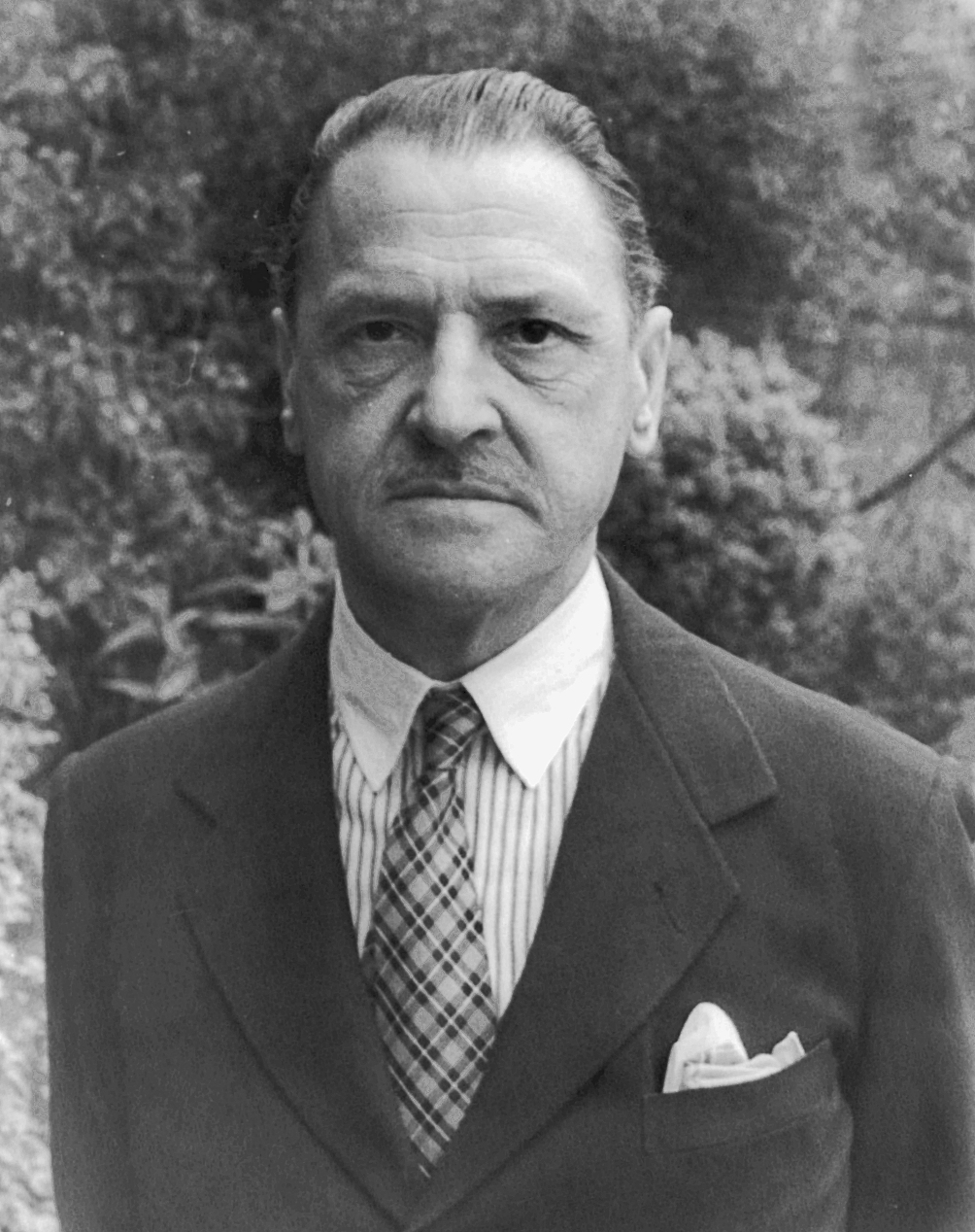
William Somerset Maugham was an English writer known for his plays, novels, and short stories. Born in Paris in 1874, he trained as a physician but never practiced, instead becoming a full-time writer. He achieved national celebrity as a playwright before turning to novels and short stories, and his works have been widely adapted for radio, cinema, and television.
- born
- 25 January 1874
- died
- 16 December 1965
- field
- Writer
- nationality
- English
- known_for
- Plays, novels, and short stories
Lore & Background
Maugham was born in Paris to a family of lawyers, and spent his first ten years there. After his mother died of tuberculosis and his father died, he was sent to England to live with his uncle, a vicar. He was schooled at The King's School, Canterbury, and later studied at a German university before becoming a medical student in London, qualifying as a physician in 1897. He never practiced medicine, instead pursuing a writing career. His first novel, Liza of Lambeth (1897), attracted attention, but he first achieved national celebrity as a playwright; by 1908 he had four plays running simultaneously in the West End. He wrote his 32nd and last play in 1933, after which he focused on novels and short stories.
Reader's Guide
Maugham's novels include Of Human Bondage (1915), The Moon and Sixpence (1919), The Painted Veil (1925), Cakes and Ale (1930), and The Razor's Edge (1944). His short stories were collected in volumes such as The Casuarina Tree (1926) and The Mixture as Before (1940). His great popularity and prodigious sales provoked adverse reactions from highbrow critics, who sought to belittle him as merely competent. More recent assessments generally rank Of Human Bondage—a book with a large autobiographical element—as a masterpiece, and his short stories are widely held in high critical regard. His plain prose style became known for its lucidity, though his reliance on clichés attracted adverse critical comment. During the First World War he worked for the British Secret Service, later drawing on those experiences for stories. Although primarily homosexual, he married Syrie Wellcome in 1917, with whom he had a daughter; the marriage lasted twelve years. His principal partner was Gerald Haxton, with whom he traveled extensively and lived in the French Riviera. After Haxton's death in 1944, Alan Searle became his secretary-companion. Maugham gave up writing novels shortly after the Second World War, and his last years were marred by senility. He died at age 91.
Did You Know?
- Maugham was born in the British Embassy in Paris to avoid French citizenship and conscription.
- He qualified as a physician in 1897 but never practiced medicine.
- By 1908 he had four plays running simultaneously in the West End of London.
- He worked for the British Secret Service during the First World War.
A Childhood Forged in Isolation
Hugh Walpole entered the world in Auckland, New Zealand, in 1884, the eldest child of an Anglican clergyman and his wife Mildred. His mother's restlessness in the colony left its mark on him, and by 1889 the family had relocated to New York, where his father took a well-paid academic post. Yet it was in England, where he was sent for schooling, that his formative years became, by his own later account, the unhappiest of his life. At Marlow he endured bullying and what he recalled as sheer, unblinking terror; the hunger for love he carried for decades, he attributed to the neglect of those years. Subsequent moves to Canterbury and Durham brought no relief — as a day boy at Durham School he felt looked down upon by boarders. His escape was the local library, where he devoured Austen, Dickens, Scott, Fielding, Trollope, and Collins. He described himself as discontented, abnormally sensitive, and excessively conceited, believing his pale, pimpled face was mistaken for a mirror of his soul. The cathedral cities of Truro, Canterbury, and Durham left such an imprint that he later built his fictional Polchester in Glebeshire from their memory.
A Prolific and Versatile Pen
Walpole's literary career began in 1909 with The Wooden Horse and never truly paused; between that debut and his death in 1941 he produced thirty-six novels, five collections of short stories, two original plays, and three memoir volumes. He was, by all accounts, a spontaneous and rapid writer, getting ideas onto paper in a rush and rarely going back to revise. His first genuine breakthrough came with his third novel, Mr Perrin and Mr Traill, a tragicomic account of a fatal collision between two schoolmasters. Encouraged early on by established figures such as Henry James and Arnold Bennett, Walpole developed a gift for vivid scene-setting and taut plotting that made him a best-seller across Britain and North America through the 1920s and 1930s. His range was remarkably wide: macabre psychological studies, children's tales, and the long Herries Chronicle series set in the Lake District. He even crossed into film, writing scenarios for two Metro-Goldwyn-Mayer productions in the 1930s and accepting a small on-screen role in the 1935 adaptation of David Copperfield.
Private Longings and the Search for a Perfect Friend
Living as a gay man in an era when male sexual relations carried the full weight of British law, Walpole navigated his private life with a mixture of intensity and careful discretion. He moved through a succession of passionate attachments to other men, yet for much of his adult life he felt he was still searching for what he called 'the perfect friend.' That search finally concluded when he found a companion in a married policeman, and the two of them settled together in the English Lake District, the same region that would anchor many of his novels. His earliest and most formative emotional entanglement came at Cambridge, where the charismatic A. C. Benson, a Magdalene College don formerly beloved at Eton, captivated the young undergraduate. Benson helped Walpole through a crisis of fading religious faith, and the two formed a close bond. Yet the relationship carried an undercurrent of unspoken desire; in 1906 Benson noted in his diary a sudden, eager outburst from Walpole declaring that he cared for him more than anyone in the world — a moment Benson found so unexpected he could scarcely believe it.
Patronage, Public Service, and Posthumous Silence
Despite his enormous commercial success in the 1920s and 1930s, Walpole has suffered a near-total eclipse in the literary landscape since his death in 1941, and his name is now largely unknown outside specialist circles. Yet in his later years he turned the patronage he had once craved as a young man seeking the approval of Henry James and Arnold Bennett into a generous sponsorship of emerging writers. His generosity extended well beyond the page: a committed patron of the visual arts, he left a substantial collection of paintings to the Tate Gallery and other British institutions, ensuring that his support for artists outlasted his own life. His public profile during the war years was equally notable; he served with the Red Cross on the Russian-Austrian front and contributed to British propaganda efforts in both Petrograd and London. In the interwar period he was as much in demand as a lecturer on literature as he was as a novelist, undertaking four exceptionally well-paid speaking tours across North America that cemented his status as one of the era's most visible literary figures.
Gallery
Frequently Asked Questions
Who is W. Somerset Maugham?
He was an English writer born in Paris in 1874 who became celebrated for his plays, novels, and short stories. He lived until 1965, leaving behind a body of work that was frequently adapted for stage, screen, and radio.
What is W. Somerset Maugham most famous for?
Maugham is best known for his sharp, darkly comic short stories and novels such as The Razor's Edge and Of Human Bondage, as well as his successful run as a London playwright. His works have been widely adapted across cinema, television, and radio.
Why didn't W. Somerset Maugham practice medicine?
Although he completed his medical training, he chose to abandon the profession entirely and devote himself to full-time writing. His medical background nonetheless informed the clinical, detached observation that characterizes much of his fiction.
How did W. Somerset Maugham first achieve national celebrity?
He rose to wide public recognition as a playwright in London's West End, where his works ran for extended seasons. It was only after establishing himself on the stage that he turned his full attention to novels and short stories.
Why is W. Somerset Maugham important to European literary history?
His work bridges the late Victorian and modernist periods, blending psychological insight with a detached, almost surgical narrative voice. His prolific output across multiple genres and his lasting influence on 20th-century English fiction make him a central figure in the canon.
More in European Literary Masters 25-35
Elsewhere in the European Literary Masters universe
Spotted an error? Know more?
This is a living reference — every entry is fact-audited, and reader corrections feed straight into our audit queue. Suggest an edit · See this site's audit record