
Thomas Malory
Author of Le Morte d'Arthur, a knight prisoner.

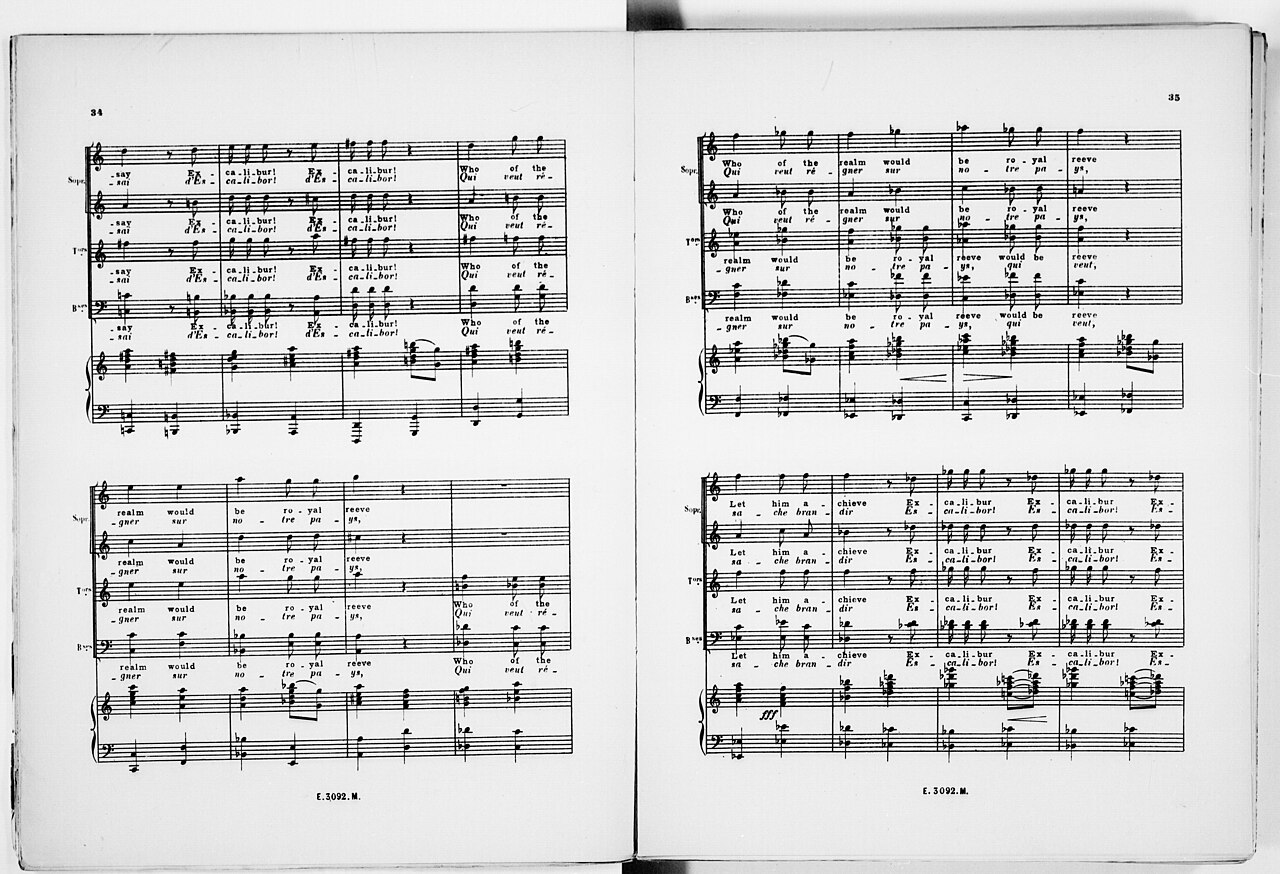
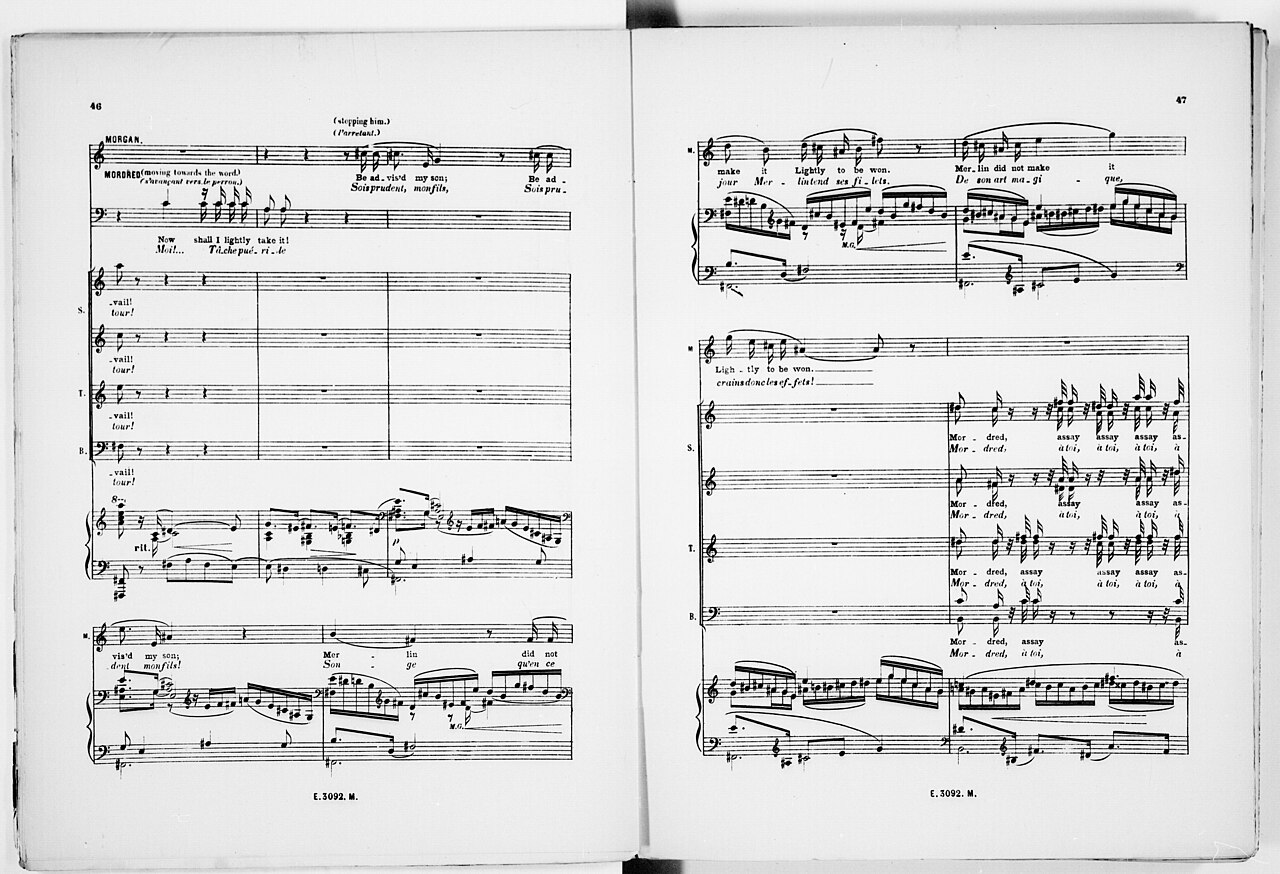
Albéniz, Isaac (1860-1909). Compositeur · Public domain
Sir Thomas Malory was an English writer, the author of Le Morte d'Arthur, the classic English-language chronicle of the Arthurian legend. Much of his life history is obscure, but he identified himself as a 'knight prisoner'. His identity has never been confirmed, with multiple candidates proposed by scholars.
- field
- Literature
- nationality
- English
- known_for
- Author of Le Morte d'Arthur
Lore & Background
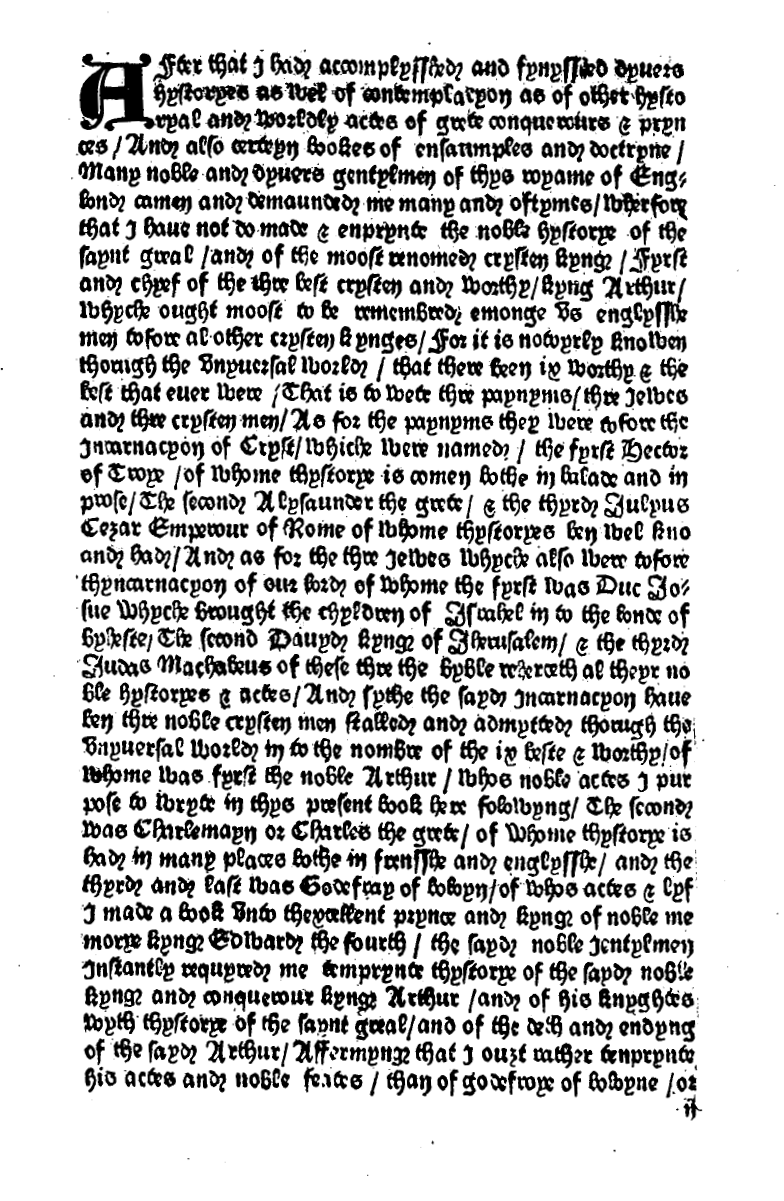
Sir Thomas Malory is known as the author of Le Morte d'Arthur, compiled and in most cases translated from French sources, and published by the London printer William Caxton in 1485. Malory identified himself as a 'knight prisoner' in the Winchester Manuscript, with prayers in the text referring to him as a 'knyght presoner' and asking for 'good deliverance'. The author was educated, as most of his material was drawn out of French, suggesting a wealthy background.
Since modern scholars began researching his identity, the most widely accepted candidate has been Sir Thomas Malory of Newbold Revel in Warwickshire, who was imprisoned at various times for criminal acts and possibly for political reasons during the Wars of the Roses. However, recent work by Cecelia Lampp Linton presents new evidence in support of Thomas Malory of Hutton Conyers, Yorkshire. The candidate from Newbold Revel was recorded as serving under Richard de Beauchamp, Earl of Warwick, and as a Member of Parliament, but his age at the time of writing has been a major point of contention.
Other candidates include Thomas Malory of Papworth St. Agnes and Moreton Corbet, and Thomas Malory of Hutton Conyers and Studley Royal. Neither is clearly recorded as having been a knight, but both come from knightly families. To date, no candidate for authorship has ever consistently commanded widespread support other than Malory of Newbold Revel, though the question remains unresolved.
Reader's Guide
Sir Thomas Malory's significance lies in his authorship of Le Morte d'Arthur, the classic English-language chronicle of the Arthurian legend, which has shaped the modern understanding of King Arthur and his knights. Published by William Caxton in 1485, the work compiled and translated French sources into English, becoming a foundational text of English literature. The mystery of Malory's identity has fueled scholarly debate for over a century, with the primary candidate being Sir Thomas Malory of Newbold Revel, a knight with a criminal record and multiple imprisonments. The discovery of the Winchester Manuscript in 1934 confirmed that the author was imprisoned while writing, supporting this candidate, though his prison record does not include the time of writing. The unresolved question of authorship highlights the challenges of medieval biography and the enduring fascination with the Arthurian legend. Malory's legacy is that of a writer who, despite his own obscure and possibly troubled life, created a work that has inspired countless adaptations and remains a cornerstone of English literature.
Did You Know?
- Malory identified himself as a 'knight prisoner' in the Winchester Manuscript of Le Morte d'Arthur.
- The most widely accepted candidate for Malory's identity is Sir Thomas Malory of Newbold Revel in Warwickshire.
- Recent work by Cecelia Lampp Linton presents new evidence in support of Thomas Malory of Hutton Conyers, Yorkshire.
- The author's material was mostly drawn out of French, indicating he was likely from a wealthy family.
Malory's Place in the Arthurian Prose Tradition
Thomas Malory's Le Morte d'Arthur stands as a seminal compilation within the broader tradition of 13th-century Arthurian prose cycles. In this literary lineage, the Round Table fellowship—originally a chivalric order established to maintain the peace of Arthur's kingdom after an early period of warring—eventually fractures into competing factions. The catalyst for this dissolution is the public revelation of Lancelot's adulterous relationship with Queen Guinevere, Arthur's own wife. Within the same narrative world, Guinevere commands her own personal order of young knights, known as the Queen's Knights. The tradition also references one or two minor tables set aside for lesser knights of Arthur's court, as well as the precedent Knights of the Old Table, which had been led by Arthur's father, Uther Pendragon, before Merlin's creation of the Round Table itself. Malory's work thus inherits and synthesizes a rich tapestry of institutional and narrative elements that had been developing across centuries of French and international storytelling.
The Knightly Company as Malory Presents It
In Malory's popular Le Morte d'Arthur, the Round Table counts either 140 or 150 members, placing his version squarely within the range of over 100 knights found in many chivalric romances. The fellowship draws its members from across Great Britain and beyond, with some knights hailing from outside Europe entirely. Arthur's own blood relations occupy prominent seats—Agravain, Gaheris, and Yvain appear as close and distant kin—while reconciled former enemies such as Galehaut, Pellinore, and Lot also hold their places. Several of the most celebrated knights, including Bedivere, Gawain, and Kay, trace their origins to older warrior figures in early Welsh tales. Others, like Lancelot, Perceval, and Tristan, serve as protagonists or eponymous heroes in their own chivalric romances. The holy knight Galahad assumes the role of principal Grail Knight in later stories, effectively replacing Perceval in that exalted function. And then there is Mordred, Arthur's traitorous son and ultimate nemesis, whose presence foreshadows the table's tragic end.
The Grail Quest and the Table's Sacred Purpose
The Round Table fellowship, as presented in the tradition Malory compiled, was originally established as a chivalric order with a clear civic mission: to ensure the peace of Arthur's kingdom following an early period of warring. In later years, however, the knights are entrusted with a far more mystical undertaking—the quest for the Holy Grail. This sacred mission connects the Arthurian world to an even older Christian lineage. A story introduced by Robert de Boron around 1200 describes the much earlier members of the Grail Table, followers of the ancient Christian Joseph of Arimathea. These early Grail followers would, centuries later, serve as the template for Uther's and Arthur's orders after Merlin created the Round Table. In the later stories that Malory's tradition encompasses, the holy knight Galahad assumes the role of the principal Grail Knight, replacing Perceval in that exalted function. The Grail quest thus represents the spiritual apex of the fellowship's purpose, elevating the knights from earthly peacekeeping to a transcendent Christian mission.
Manuscript Evidence and the Question of Numbers
The Winchester Manuscript of Le Morte d'Arthur preserves a passage known as the 'Healing of Sir Urry' episode, in which a list of knights is recorded alongside many of the more prominent names already familiar to readers. This manuscript evidence is part of a much larger puzzle: the exact number of Round Table members varies enormously across different versions. The figure can range from as few as a dozen to as many as 1,600 seats, the latter number claimed by Layamon in his Brut. Most commonly, sources place the count between 100 and 300, often with one seat left permanently empty. Malory's own text settles on 140 or 150. The number 300 held particular significance beyond the page: King Edward III of England chose it when he established his own real-life Order of the Round Table at Windsor Castle in 1344. Meanwhile, the physical Winchester Round Table artifact names only 24 knights, not counting Arthur, offering a starkly different snapshot of the fellowship's membership.
Gallery
Frequently Asked Questions
Who is Thomas Malory?
Thomas Malory was a 15th-century English writer best known for composing Le Morte d'Arthur, the foundational English-language retelling of the Arthurian legend. He described himself in his own text as a 'knight prisoner,' though very little else about his personal life has been verified by scholars.
What is Thomas Malory's most famous work?
His sole surviving major work is Le Morte d'Arthur, a sprawling chronicle that weaves together the lives of King Arthur, his knights, and the quest for the Holy Grail into one continuous narrative. It remains the most influential English-language treatment of the Arthurian stories.
What do we actually know about Thomas Malory's life?
Almost nothing is confirmed; his exact identity, birth date, and death date remain subjects of scholarly debate with multiple candidates proposed over the centuries. The only reliable biographical detail comes from his own text, where he refers to himself as a 'knight prisoner' and mentions being in and out of custody.
How does Le Morte d'Arthur end?
The story concludes with Arthur's death following his final battle against Mordred, after which the surviving knights scatter and the Round Table era comes to a close. Malory frames the ending with a meditation on the passing of chivalric ideals.
Why is Thomas Malory still relevant to literature today?
Le Morte d'Arthur established the English-language version of the Arthurian cycle that later authors, from Shakespeare to modern fantasy writers, have drawn upon. It shaped how English-speaking audiences understand the legend of King Arthur and his knights to this day.
More in European Literary Masters 25-35
Elsewhere in the European Literary Masters universe
Spotted an error? Know more?
This is a living reference — every entry is fact-audited, and reader corrections feed straight into our audit queue. Suggest an edit · See this site's audit record