
W. G. Sebald
German writer and academic known for innovative prose.

WG Sebald (1944-2001) (text); A Dorschel (photo) · CC BY-SA 4.0
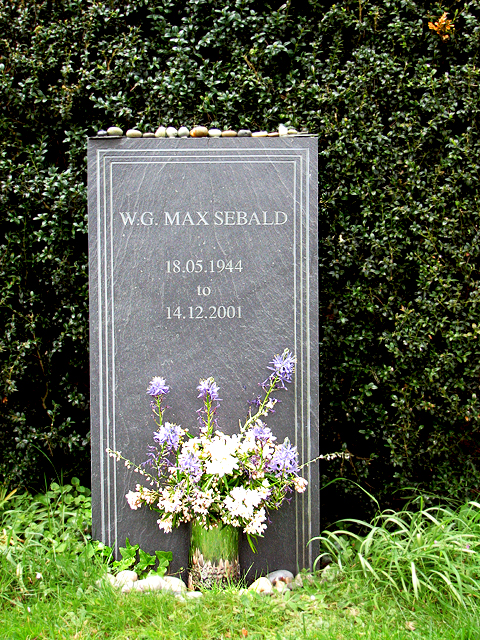
Winfried Georg Sebald, who went by W. G. Sebald and preferred the name Max, was a German writer and academic. Born in Wertach, Bavaria, on 18 May 1944, he was the second of three children and the only son of Rosa and Georg Sebald. He spent most of his youth, from about age four to nineteen, in the nearby town of Sonthofen. His father had joined the Reichswehr in 1929 and served in the Wehrmacht during the Nazi era, taking part in the 1939 invasion of Poland; he remained a distant figure, held as a prisoner of war until 1947. The most important male presence in Sebald’s early years was his maternal grandfather, Josef Egelhofer, a small-town police officer.
While at school in Oberstdorf, Sebald was shown images of the Holocaust and later recalled that no one knew how to explain what they had seen. The Holocaust and European modernity—particularly its warfare and persecution—became central themes in his fiction. He studied German and English literature at the University of Freiburg and then the University of Fribourg in Switzerland, earning a degree in 1965. After working as a lector at the University of Manchester from 1966 to 1969, he returned to St. Gallen, Switzerland, hoping to teach but could not settle. He married his Austrian-born wife, Ute, in 1967.
In 1970, Sebald became a lecturer at the University of East Anglia (UEA), where he completed his PhD in 1973 with a dissertation on Alfred Döblin’s novels. He earned his habilitation from the University of Hamburg in 1986 with a thesis titled 'The Revival of Myth: A Study of Alfred Döblin's Novels'. In 1987, he was appointed chair of European literature at UEA, and in 1989 he became the founding director of the British Centre for Literary Translation. He lived in Wymondham and Poringland in Norfolk while teaching there.
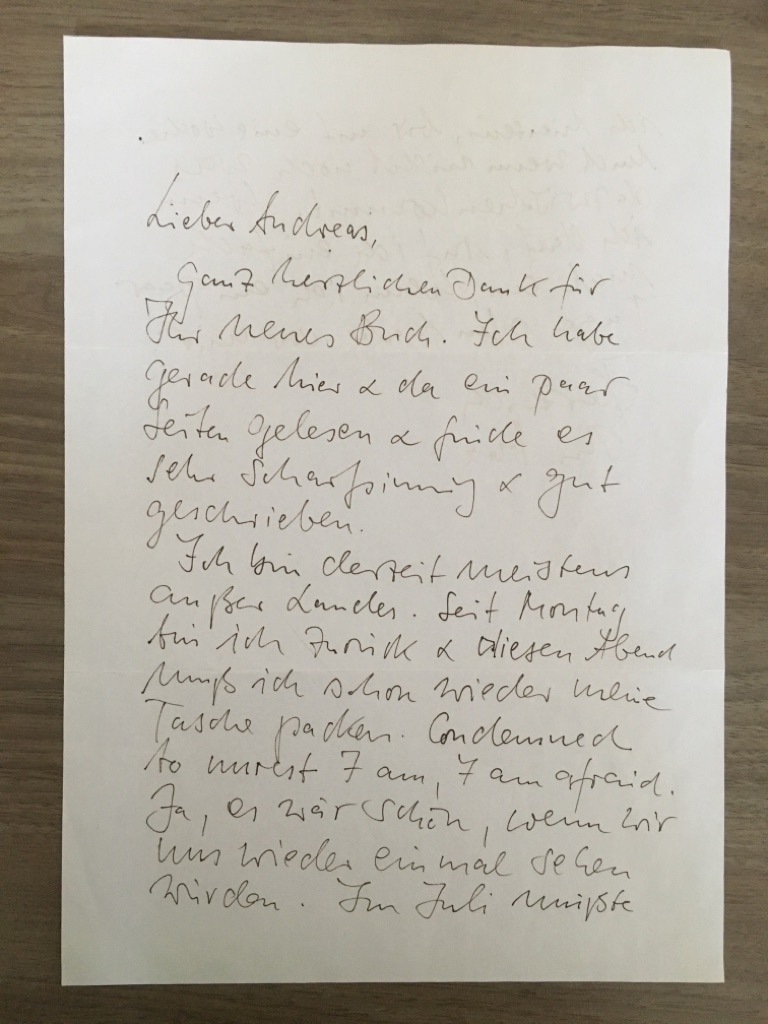
The 2001 publication of *Austerlitz* brought Sebald worldwide recognition; literary critics celebrated it frenetically, and he was tipped as a possible future Nobel laureate. He was in high demand from literary institutions and radio programmes across Western Europe, with newspapers and magazines from Germany, Austria, Belgium, the Netherlands, Britain, and the U.S. urging him for interviews. “Condemned to unrest I am, I am afraid,” he wrote in June 2001. He had long been aware of a congenital cardiac insufficiency, and in August 2001 described himself as “someone who knows he has to leav
- born
- 18 May 1944
- died
- 14 December 2001
- field
- Literature, academia
- nationality
- German
- known_for
- Novels blending fact, recollection, and fiction; themes of memory, loss, and the Holocaust
Lore & Background
Sebald was born in Wertach, Bavaria, the second of three children and only son of Rosa and Georg Sebald. He spent much of his youth in Sonthofen. His father served in the Wehrmacht and was a prisoner of war until 1947; his maternal grandfather, Josef Egelhofer, was the most important male presence in his early years. While at school in Oberstdorf, Sebald was shown images of the Holocaust and recalled that no one knew how to explain what they had just seen. He later explored the Holocaust and European modernity as central themes in his fiction.
Sebald studied German and English literature at the University of Freiburg and the University of Fribourg, receiving a degree in 1965. He worked as a lector at the University of Manchester from 1966 to 1969, then returned to St. Gallen for a year. He married Ute in 1967. In 1970 he became a lecturer at the University of East Anglia, completing his PhD in 1973. He acquired habilitation from the University of Hamburg in 1986, was appointed to a chair of European literature at UEA in 1987, and became founding director of the British Centre for Literary Translation in 1989. He lived in Wymondham and Poringland in Norfolk.
Sebald's works include the novels Vertigo, The Emigrants, The Rings of Saturn, and Austerlitz, as well as poetry collections and non-fiction. His 2001 publication Austerlitz brought him worldwide recognition and led to speculation about a future Nobel Prize. He died in a car crash near Norwich in December 2001; the coroner reported he had suffered a heart attack before the collision. He is buried in St. Andrew's churchyard in Framingham Earl.
Reader's Guide
Sebald's significance lies in his distinctive literary style, which blends fact, apparent fact, recollection, and fiction, often accompanied by indistinct black-and-white photographs. His works are largely concerned with memory and loss, decay, and the trauma of the Second World War and the Holocaust. He denied the singularity of the Holocaust, situating it within modern European history. He rejected the mainstream of Western German postwar literature, favoring an intentionally old-fashioned and elaborate form of German. His novels are presented as observations and recollections made while traveling. His legacy includes the Sebaldweg, an eleven-kilometer walkway in Wertach created in 2005, and the Sebald Copse at the University of East Anglia, planted in 2003.
Did You Know?
- Sebald preferred to be called Max Sebald.
- His father served in the Wehrmacht and participated in the Invasion of Poland in 1939.
- Sebald's PhD dissertation was titled 'The Revival of Myth: A Study of Alfred Döblin's Novels.'
- The English translation of Austerlitz won the 2002 Independent Foreign Fiction Prize.
The Sebald Award: Honoring Mid-Career Fiction
The PEN/W.G. Sebald Award for a Fiction Writer in Mid-Career was a prize administered by the PEN American Center during the brief window of 2010 and 2011. Its purpose was to recognize a promising writer who had already published three works of fiction, positioning the recipient at a particular juncture in their literary trajectory. The award carried Sebald's name, linking the German author's legacy to the ongoing recognition of developing fiction writers within the American literary landscape. As a mid-career designation, the prize distinguished itself from awards targeting debut authors or those celebrating lifetime achievement, instead spotlighting writers who had demonstrated a consistent body of work but were still building toward their full creative potential. The two-year run of the award suggests it was a relatively new initiative within PEN's broader portfolio of literary honors, one that sought to fill a specific gap in the recognition ecosystem for fiction writers at a particular stage of their published output.
Institutional Framework: PEN America and Global Literary Prizes
The PEN/W.G. Sebald Award existed within a much larger institutional architecture. PEN America Literary Awards have been characterized as among the major American literary prizes, and the broader PEN organization sponsors awards through more than 145 PEN centres spread across the globe. This international network means the Sebald Award was one thread in a vast tapestry of literary recognition spanning continents and languages. The PEN American Center, which administered the Sebald prize, also oversaw numerous other awards covering everything from freedom of expression to translation to children's literature. The fact that the Sebald Award was one of many prizes under the PEN umbrella underscores the organization's role as a central hub for literary patronage in the United States, connecting individual authors to a worldwide community of writers, editors, and literary institutions committed to supporting the craft.
A Brief Tenure Among Discontinued Prizes
The PEN/W.G. Sebald Award was active for only two years, 2010 and 2011, before ceasing to be presented. This brief lifespan places it among a long list of PEN American Center awards that are no longer issued. The organization's history includes numerous discontinued prizes, ranging from the PEN/Amazon.com Short Story Award (active for a single year in 2000) to the Architectural Digest Award for Literary Writing on the Visual Arts (2000–2001) and the PEN/Steven Kroll Award for picture book writers (2012–2014). The Sebald Award's two-year existence fits a pattern of literary prizes that emerge, serve a specific purpose, and then conclude. Whether due to funding changes, shifting institutional priorities, or the natural lifecycle of a sponsorship arrangement, the award's discontinuation means that the specific recognition of mid-career fiction writers under Sebald's name became a historical footnote in PEN's broader catalogue of honors.
The Sebald Award in the Broader PEN Prize Landscape
During the years the Sebald Award was active, it occupied a specific niche within PEN America's portfolio of literary honors. It sat alongside prizes addressing very different aspects of the literary world: the PEN/Barbara Goldsmith Freedom to Write Award honoring writers who fought courageously for expression rights, the PEN/Newman's Own First Amendment Award safeguarding freedom of the written word, the Gregory Kolovakos Award recognizing translation work bridging Hispanic and English-language literature, and the Roger Klein Awards celebrating editorial achievement in trade publishing. The Sebald Award's focus on a fiction writer's mid-career development was distinct from these other categories, which addressed advocacy, translation, editing, or debut works. This diversity of prizes reflected PEN's commitment to supporting the literary ecosystem at multiple points—writers, translators, editors, and advocates—while the Sebald Award specifically targeted the creative fiction writer at a formative stage of their published output.
Gallery
Frequently Asked Questions
Who is W. G. Sebald?
Winfried Georg Sebald (1944–2001) was a German novelist and university lecturer whose deeply personal prose works interweave historical research, family memory, and invented narrative. He is widely regarded as one of the most original voices in postwar European literature.
What are W. G. Sebald's most famous books?
His best-known novels include The Emigrants, Austerlitz, The Rings of Saturn, and Vertigo, all of which blend the author's own recollections with the stories of other individuals and extensive photographic documentation. Fans often begin with The Emigrants before moving to Austerlitz for its more sustained meditation on identity and the Holocaust.
What themes run through W. G. Sebald's work?
Loss, displacement, and the long shadow of the Holocaust form the emotional core of nearly every book he wrote. He also returns repeatedly to how memory distorts the past and how landscape itself seems to carry traces of vanished lives.
How did W. G. Sebald die?
Sebald was killed on 14 December 2001 when the small aircraft he was piloting crashed into a tree near Roth, Bavaria, killing him and his passenger. He had been flying the plane himself at the time of the accident.
Why is W. G. Sebald considered important in European literature?
He dissolved the conventional boundaries between novel, memoir, and scholarly research, producing a form of writing that resists easy categorization. His influence on a generation of writers stems from his insistence that personal grief and collective history cannot be neatly separated.
More in European Literary Masters 25-35
Elsewhere in the European Literary Masters universe
Spotted an error? Know more?
This is a living reference — every entry is fact-audited, and reader corrections feed straight into our audit queue. Suggest an edit · See this site's audit record