
Thomas More
English lawyer, statesman, author of Utopia, executed for refusing Oath of Supremacy.

The Folger Shakespeare Library · CC BY-SA 4.0
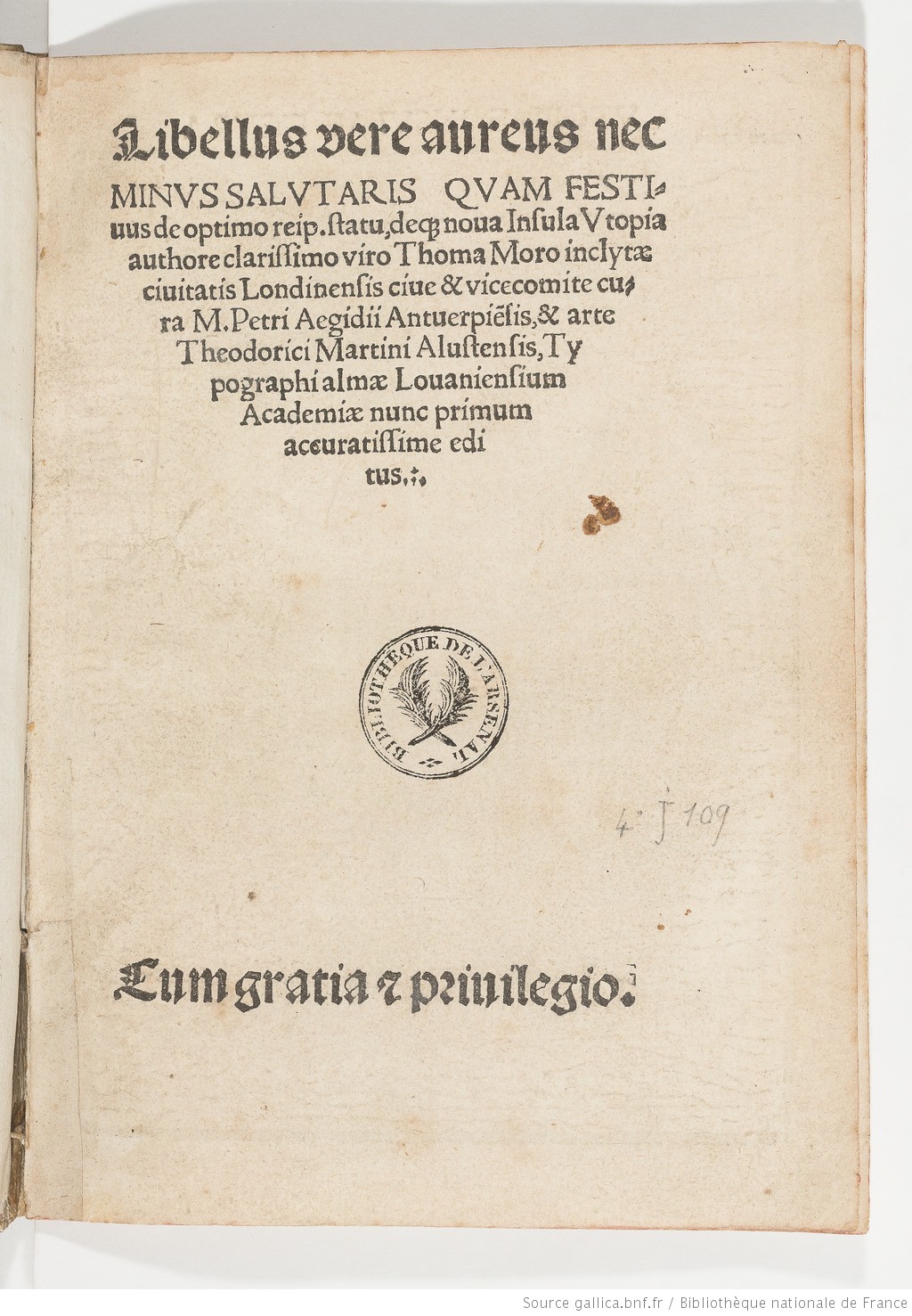
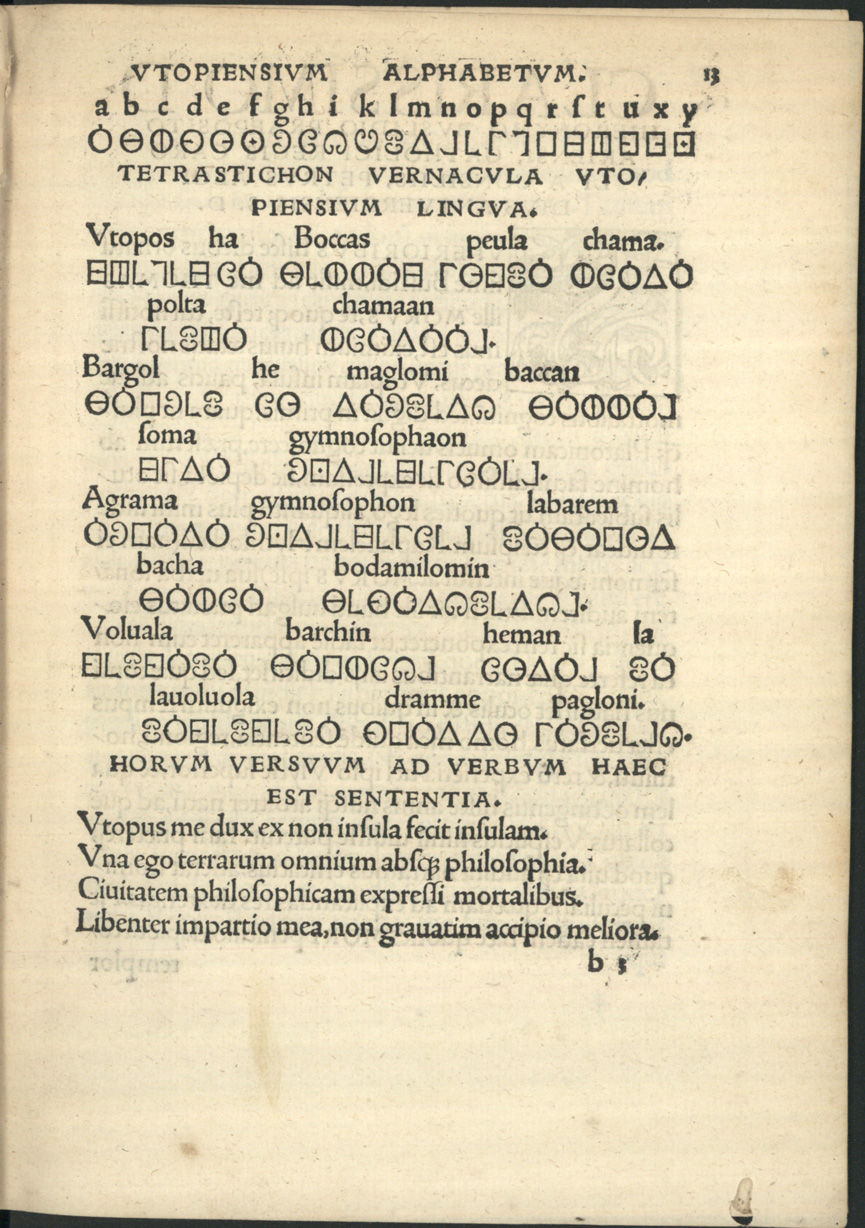
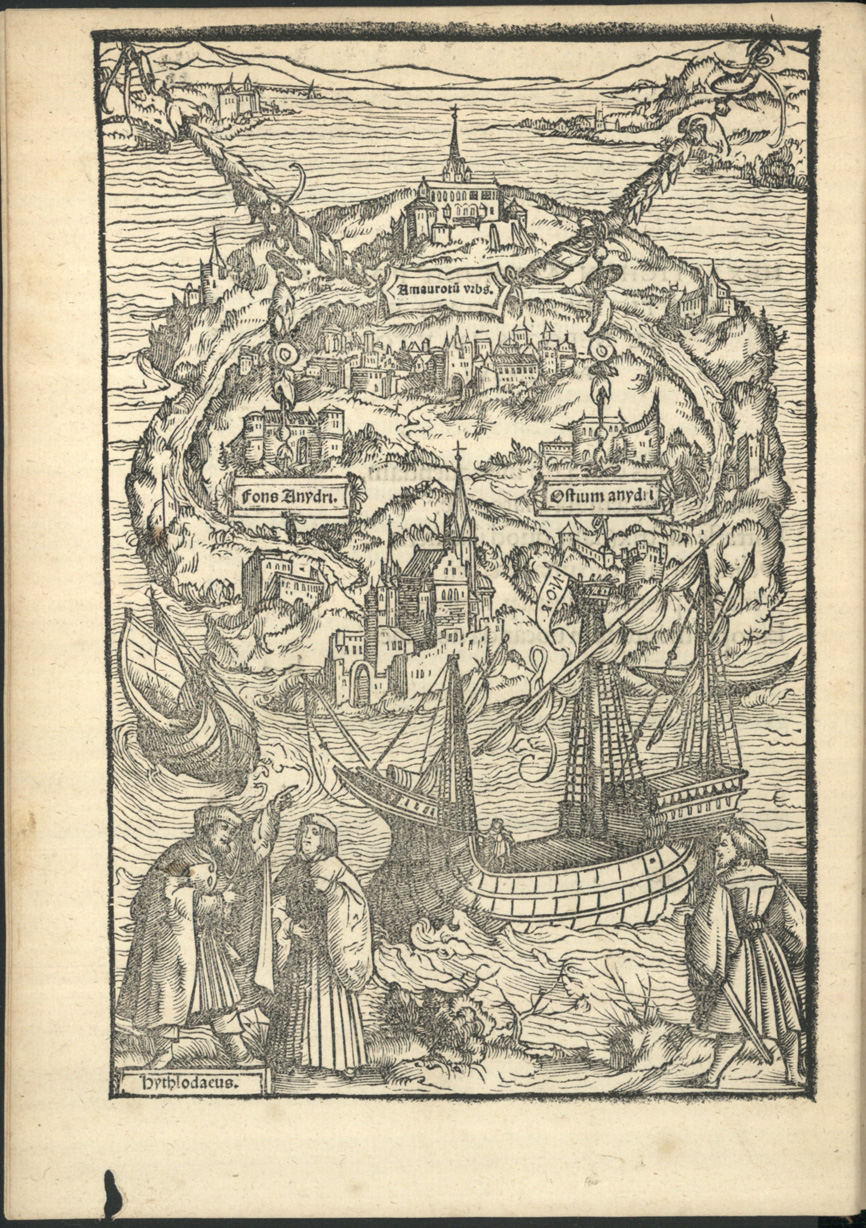
Thomas More (7 February 1478 – 6 July 1535) was an English lawyer, judge, social philosopher, author, statesman, theologian, and Renaissance humanist. He served Henry VIII as Lord Chancellor from October 1529 to May 1532 and wrote Utopia (1516), which describes the political system of an imaginary island state. He opposed the Protestant Reformation and Henry VIII's separation from the Catholic Church, refusing to acknowledge the king as supreme head of the Church of England. After refusing to take the Oath of Supremacy, he was convicted of treason and executed. He was canonised as a martyr by Pope Pius XI in 1935 and declared patron saint of statesmen and politicians by Pope John Paul II in 2000.
- born
- 7 February 1478, City of London
- died
- 6 July 1535
- field
- Law, politics, philosophy, theology
- nationality
- English
- known_for
- Utopia; Lord Chancellor; opposition to Henry VIII's supremacy; martyrdom
Lore & Background
Thomas More was the second of six children, educated at St. Anthony's School and later at Oxford under Thomas Linacre and William Grocyn. He left Oxford after two years to study law at New Inn and Lincoln's Inn, being called to the bar in 1502. He served as a household page to Archbishop John Morton, who nominated him for Oxford. More was a noted linguist, proficient in Latin and Greek, and translated the Life of Pico della Mirandola into English.
More married Jane Colt in 1505 and had four children; after her death in 1511, he quickly married Alice Middleton, a widow, raising her daughter as his own. He gave his daughters the same classical education as his son, an unusual practice at the time. More lived near a Carthusian monastery and practiced asceticism, including wearing a hair shirt. He was a close friend of Desiderius Erasmus, who praised his character as kind and harmonious.
More was elected to Parliament in 1504 and again in 1510. He opposed Henry VII's demand for money in the 1504 parliament. As Lord Chancellor, he directed polemics against Martin Luther, Huldrych Zwingli, and William Tyndale. He refused to acknowledge Henry VIII as head of the Church of England and the annulment of his marriage to Catherine of Aragon. After refusing the Oath of Supremacy, he was convicted of treason on what he stated was false evidence and executed, reportedly saying: 'I die the King's good servant, and God's first.'
Reader's Guide
Thomas More's significance lies in his dual legacy as a humanist author and a martyr for conscience. His book Utopia, published in 1516, became a foundational text of political philosophy, describing an ideal society on an imaginary island. His refusal to accept Henry VIII's supremacy over the Church, despite his long service as Lord Chancellor, led to his execution and subsequent veneration as a saint. Pope John Paul II in 2000 declared him patron saint of statesmen and politicians, noting that he demonstrated 'the value of a moral conscience' while also reflecting 'the limits of the culture of his time' in his actions against heretics. More's decision to educate his daughters set an example for noble families, and his friendship with Erasmus produced a lasting portrait of his character. His life and death continue to be studied as a case of the conflict between political loyalty and religious conviction.
Did You Know?
- More wrote Utopia in 1516, describing the political system of an imaginary island state.
- He was canonised as a martyr by Pope Pius XI in 1935.
- More insisted on giving his daughters the same classical education as his son, an unusual attitude at the time.
- At his execution, More reportedly said: 'I die the King's good servant, and God's first.'
Intellectual Formation and Career
Born in the City of London in February 1478 to the lawyer and judge Sir John More and his wife Agnes, Thomas More was shaped from the start by a household of legal and civic ambition. His schooling at St. Anthony's, then among London's finest, prepared him for a broader intellectual world. As a household page to Archbishop John Morton between 1490 and 1492, he absorbed the Archbishop's passion for the 'New Learning'—what would later be called humanism. Morton's faith in More's potential earned him a place at Oxford, where under Thomas Linacre and William Grocyn he became proficient in Latin and Greek. At his father's insistence he left after two years for legal training at New Inn and then Lincoln's Inn, where he was called to the bar in 1502. A natural linguist who could joke as readily in Latin as English, he also translated poetry and rendered the Life of Pico della Mirandola into English. His most celebrated work, Utopia, published in 1516, imagined the political order of a fictional island. He would later serve as Lord Chancellor from October 1529 to May 1532, placing him at the heart of Tudor governance.
Defiance and Execution
More's opposition to the Protestant Reformation was fierce and sustained; he directed sharp polemics against the theology of Martin Luther, Huldrych Zwingli, and William Tyndale. But his most consequential stand was against his own sovereign. He refused to accept Henry VIII's break with the Catholic Church, would not acknowledge the king as supreme head of the Church of England, and rejected the annulment of Henry's marriage to Catherine of Aragon. When the Oath of Supremacy was demanded, More declined to take it. The consequence was swift and severe: he was convicted of treason, a charge he maintained rested on false evidence, and was executed on 6 July 1535. Accounts of his final moments record him declaring, 'I die the King's good servant, and God's first.' That single sentence encapsulates the central tension of his life—loyalty to a monarch held in tension with a higher allegiance to conscience and faith. His refusal to bend, even at the cost of his own life, transformed him from a statesman into a lasting symbol of principled resistance.
Family, Marriage, and the Education of Daughters
More married Joanna 'Jane' Colt in 1505 and settled into a home on Bucklersbury that he would occupy for nearly two decades before moving to Chelsea in 1525. Erasmus noted that More wanted to give his young wife a richer education than she had received at home, tutoring her in music and literature. The couple had four children—Margaret, Elizabeth, Cecily, and John—but Jane died in 1511. Against friends' advice and prevailing custom, More remarried within thirty days, choosing the widow Alice Middleton to manage his household. The speed was so unusual that he required a dispensation from the banns, which his good reputation made easy to obtain. He raised Alice's daughter from her first marriage, Alice Alington, as his own, and also took guardianship of two young girls. Perhaps his most remarkable domestic decision was insisting that his daughters receive the same classical education as his son. His eldest, Margaret, became renowned for her fluency in Greek and Latin; when a bishop read a letter she had written in 1522, he was so astonished by its pure Latinity and erudition that he rewarded her with a Portuguese gold coin. More's example influenced other noble families and even shifted Erasmus's views on women's education.
Spiritual Convictions and Enduring Legacy
Between 1503 and 1504, More lived near a Carthusian monastery outside London and joined the monks in their spiritual exercises. Although he deeply admired their piety, he ultimately chose the lay path, standing for Parliament in 1504 and marrying the following year. Yet the monastic impulse never fully left him; for the rest of his life he maintained ascetic practices, wearing a hair shirt against his skin and occasionally engaging in self-flagellation. A tradition within the Third Order of Saint Francis honours him as a member on their calendar of saints. His legacy as a martyr was formally recognised when Pope Pius XI canonised him in 1935. In 2000, Pope John Paul II went further, declaring More the patron saint of statesmen and politicians. In that proclamation the pope observed that More 'demonstrated in a singular way the value of a moral conscience,' while also acknowledging that his actions against heretics 'reflected the limits of the culture of his time.' That balanced assessment—celebrating his unwavering integrity while honestly noting the constraints of his era—has made his sanctity feel neither untouchable nor simplistic, but deeply human.
Gallery
Frequently Asked Questions
Who is Thomas More?
Thomas More (1478–1535) was an English Renaissance humanist, lawyer, and statesman best remembered as the author of Utopia. He held the office of Lord Chancellor under Henry VIII and later became a Catholic martyr for refusing to accept the king's break with Rome.
What is Utopia and why does it matter?
Published in 1516, Utopia is a satirical dialogue that imagines a perfect island society governed by communal ownership and rational law. It became one of the foundational texts of political philosophy and gave the English language the very word 'utopia.'
How did Thomas More's life end?
After refusing to swear the Oath of Supremacy declaring Henry VIII head of the Church of England, More was tried for treason and beheaded on Tower Hill in July 1535. The Catholic Church later canonised him as a martyr for his faith.
What political role did Thomas More hold?
More served as Lord Chancellor of England from 1529 to 1532, the second-highest office in the realm and the king's chief minister. In that capacity he helped draft major legislation before resigning over the royal divorce and the Church split.
Why is Thomas More considered a European literary master?
Beyond Utopia, More produced a wide range of theological treatises, dialogues, and political commentary that shaped Renaissance humanist thought across England and the Continent. His blend of sharp legal reasoning, classical learning, and moral conviction set a standard for prose that influenced generations of writers.
More in European Literary Masters 25-35
Elsewhere in the European Literary Masters universe
Spotted an error? Know more?
This is a living reference — every entry is fact-audited, and reader corrections feed straight into our audit queue. Suggest an edit · See this site's audit record