
Thomas Mann
German novelist and Nobel laureate, exiled under Hitler.

Unknown author · Public domain
Paul Thomas Mann (6 June 1875 – 12 August 1955) was a German writer who produced novels, short stories, essays, and social criticism, and was also a philanthropist. He won the Nobel Prize in Literature in 1929. His longer works and novellas are known for their dense symbolism and irony, and they dig deep into the psychology of artists and intellectuals. To examine and critique the European and German character, he reworked German and Biblical tales in modern form, drawing on the ideas of Goethe, Nietzsche, and Schopenhauer. Mann is a key figure in Exilliteratur, the body of German literature created in exile by those who opposed Hitler.
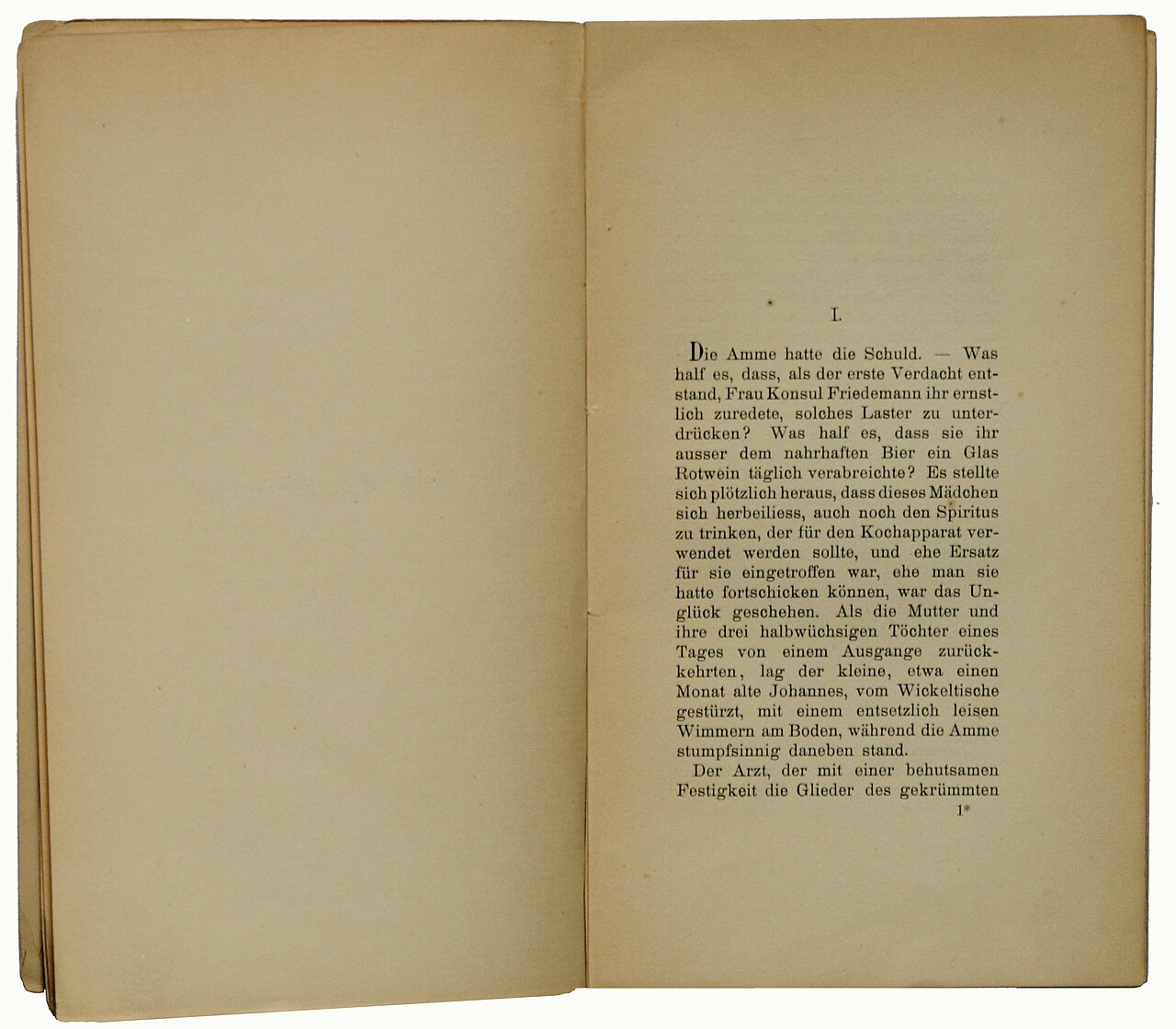
Born in Lübeck to a Hanseatic family, Mann was the second son of a senator and grain merchant and a Brazilian mother of German, Portuguese, and Native Brazilian descent. Raised in his father's Lutheran faith, he lost his father in 1891, after which the family business was dissolved and they moved to Munich. He studied science at a Lübeck secondary school, then history, economics, art history, and literature at universities in Munich, aiming for a journalism career. From 1893 to 1933, he lived in Munich, except for a year in Italy with his older brother, novelist Heinrich Mann. After a brief stint at an insurance company, he began writing for the magazine *Simplicissimus*, and his first short story, "Little Herr Friedemann," appeared in 1898.
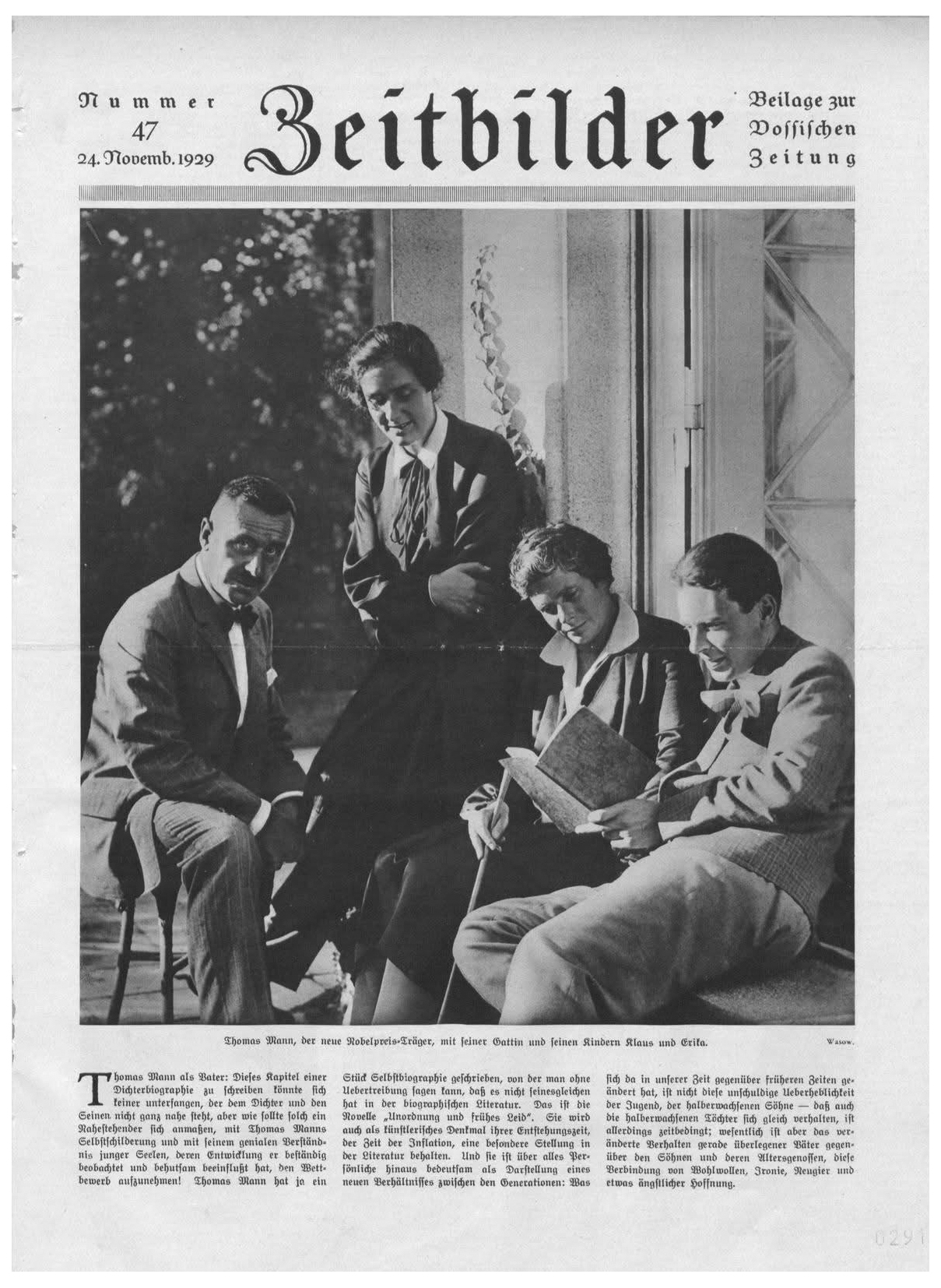
In 1905, he married Katia Pringsheim, from a wealthy, secular Jewish industrialist family; she later converted to Lutheranism. They had six children: Erika, Klaus, Golo, Monika, Elisabeth, and Michael. Three of them—Erika, Klaus, and Golo—became notable German writers. Using Katia's family wealth, they bought a summer property in Bad Tölz in 1908, building a country house there the next year, and in 1914 purchased a Munich villa where they lived until 1933.
In 1912, Katia spent several months in a Davos sanatorium for what was wrongly thought to be tuberculosis; Thomas visited her there, an experience that inspired his 1924 novel *The Magic Mountain*. He was alarmed by the risk of war between Germany and France after the Agadir Crisis and later by the outbreak of World War I. The novel ends with that war beginning, and its hero enlists, his fate unknown. As a German patriot, Mann used proceeds from the summer house in 1917 to buy war bonds, which became worthless after Germany's defeat
- born
- 6 June 1875
- died
- 12 August 1955
- field
- Novelist, short story writer, social critic, essayist
- nationality
- German (later naturalized U.S. citizen)
- known_for
- Buddenbrooks, The Magic Mountain, Death in Venice, Joseph and His Brothers, Doctor Faustus
Lore & Background
Thomas Mann was born to a Hanseatic family in Lübeck, the second son of a senator and grain merchant and a Brazilian-born mother. After his father's death in 1891, the family moved to Munich. Mann studied history, economics, art history, and literature at university, and worked briefly at an insurance company before writing for the magazine Simplicissimus. His first short story, 'Little Herr Friedemann,' was published in 1898. In 1905, he married Katia Pringsheim, from a wealthy secular Jewish industrialist family; they had six children, three of whom—Erika, Klaus, and Golo—became significant German writers.
Mann lived in Munich from 1893 until 1933, with a year spent in Italy with his older brother, novelist Heinrich Mann. In 1912, his wife Katia was treated for what was mistakenly believed to be tuberculosis at a Davos sanatorium—a stay that inspired *The Magic Mountain*. Though he won the Nobel Prize in 1929, Mann did not use the prize money to build a cottage in Nida, Lithuania; that cottage was funded separately in 1930–1931, while the Nobel funds largely went to pay off debts and taxes.
Reader's Guide
Thomas Mann's significance lies in his profound exploration of the psychology of the artist and the intellectual, set against the backdrop of European and German cultural crises. His novels, such as Buddenbrooks, The Magic Mountain, and Doctor Faustus, use modern versions of German and Biblical stories, along with the ideas of Goethe, Nietzsche, and Schopenhauer, to critique the European soul. As a leading figure of Exilliteratur, his life and work embody the experience of exile under the Nazi regime. His legacy endures through his literary innovations and his role as a moral voice against totalitarianism, influencing subsequent generations of writers and thinkers.
Did You Know?
- Mann's mother, Júlia da Silva Bruhns, was a Brazilian woman of German, Portuguese, and Native Brazilian ancestry.
- He used his 1929 Nobel Prize money to build a cottage in Nida, Lithuania, on the Curonian Spit.
- Three of his six children—Erika, Klaus, and Golo Mann—became significant German writers.
- Mann's 1912 visit to his wife in a Davos sanatorium inspired his novel The Magic Mountain.
Literary Ambition and Major Works
Thomas Mann's body of work stands as one of the most ambitious literary achievements of the twentieth century. A novelist, short story writer, essayist, and social critic, he earned the 1929 Nobel Prize in Literature for prose that married deep psychological insight with sweeping cultural commentary. His novels and novellas are distinguished by their symbolic density and ironic architecture, probing the inner lives of artists and intellectuals while simultaneously interrogating the broader European and German spirit. Drawing on modernized German and Biblical narratives, Mann wove in the philosophical currents of Goethe, Nietzsche, and Schopenhauer to create works of extraordinary range. His career spanned from the 1898 short story "Little Herr Friedemann" through the landmark Buddenbrooks (1901), the psychologically layered The Magic Mountain (1924), the wartime novella Death in Venice (1912), the sprawling tetralogy Joseph and His Brothers (1933–1943), and the late, devastating Doctor Faustus (1947). Together these works chart a lifetime of artistic ambition and moral reckoning.
A Dynasty of German Letters
Few literary families in German history rival the Manns in sheer creative concentration. Paul Thomas Mann was born in Lübeck into the Hanseatic merchant class; his father served as a senator and grain trader, while his mother, Júlia da Silva Bruhns, carried Brazilian, Portuguese, and Native Brazilian heritage. The family's social standing became the subject of his debut novel, Buddenbrooks. His elder brother Heinrich Mann carved out his own reputation as a novelist, and the siblings spent a year together in Palestrina, Italy. Paul's marriage to Katia Pringsheim, from a wealthy secular Jewish industrialist family, produced six children, three of whom—Erika, Klaus, and Golo—went on to become significant German writers in their own right. The dynasty thus spanned multiple generations and disciplines, with each member contributing to the cultural conversation. Katia later converted to Lutheranism, aligning the household under the religious tradition of Paul's father, and the Pringsheim wealth underpinned the family's stability for decades.
Flight from the Reich
The February 1933 seizure of power by Adolf Hitler transformed Thomas Mann's life from one of settled Munich respectability into a decades-long displacement. Having just completed a book tour through Amsterdam, Brussels, and Paris, Mann learned from his children Klaus and Erika, still in Munich, that returning home would be dangerous. Initially skeptical of the regime's capacity for violence, he was overruled by their insistence—a judgment vindicated when it emerged that even the family's driver-caretaker had become a Nazi informant and an arrest warrant had been issued. Bavarian Political Police searched and confiscated his Munich house, its contents, and bank accounts. His son Golo, at considerable personal risk, smuggled the finished chapters of the Joseph novel and sensitive diaries across the border. The family settled in Küsnacht near Zürich, and Mann formally resigned from the Prussian Academy of Arts' Poetry Section in March 1933. When war broke out in 1939, he crossed to the United States, remaining there until 1952. He became one of the most prominent voices of Exilliteratur, the German-language literature of political exile.
Munich, the Sanatorium, and the Seeds of Great Novels
From 1891 until his forced departure in 1933, Munich was Thomas Mann's creative home. After his father's death and the liquidation of the family trading firm, the household relocated from Lübeck, and Mann briefly worked at the South German Fire Insurance Company before finding his voice through the magazine Simplicissimus. His marriage to Katia Pringsheim in 1905 anchored a domestic life enriched by a country house in Bad Tölz (built 1909) and, from 1914, a villa in the Bogenhausen district. A pivotal creative spark arrived in 1912, when Katia spent months in a Davos sanatorium for a misdiagnosis of tuberculosis; Mann's visits there planted the seed for The Magic Mountain, whose publication in 1924 restored his finances after the war-bond losses and the 1923–24 inflation. The 1929 Nobel Prize enabled him to build a summer cottage in Nida, Lithuania, on the Curonian Spit, where he worked on Joseph and His Brothers during the summers of 1930 through 1932.
Gallery
Frequently Asked Questions
Who is Thomas Mann?
Paul Thomas Mann (1875–1955) was a German-born novelist, essayist, and social critic who became one of the twentieth century's most celebrated literary voices. He received the Nobel Prize in Literature in 1929 and is widely regarded as a towering figure of modern German-language fiction.
What are Thomas Mann's most important works?
His major novels include Buddenbrooks, The Magic Mountain, Doctor Faustus, and the tetralogy Joseph and His Brothers, alongside the novella Death in Venice. These works are celebrated for their layered symbolism and deep psychological portraits of artists and intellectuals.
Which thinkers shaped Thomas Mann's writing?
Mann drew heavily on the philosophical legacies of Goethe, Nietzsche, and Schopenhauer to interrogate European and German cultural identity. He frequently reimagined Germanic and Biblical narratives in a modern, critical register to expose the contradictions of his era.
Why was Thomas Mann in exile?
After the Nazi seizure of power in Germany, Mann left the country and eventually settled in the United States, where he became a naturalized citizen. His experience as a political refugee made him a central voice in Exilliteratur, the tradition of German-language writing produced in displacement.
What makes Thomas Mann's prose distinctive?
His style is marked by dense, allusive symbolism, sustained irony, and an almost forensic attention to the inner lives of his characters. Critics often note that his sentences carry multiple layers of meaning, rewarding close, repeated reading.
More in European Literary Masters 25-35
Elsewhere in the European Literary Masters universe
Spotted an error? Know more?
This is a living reference — every entry is fact-audited, and reader corrections feed straight into our audit queue. Suggest an edit · See this site's audit record